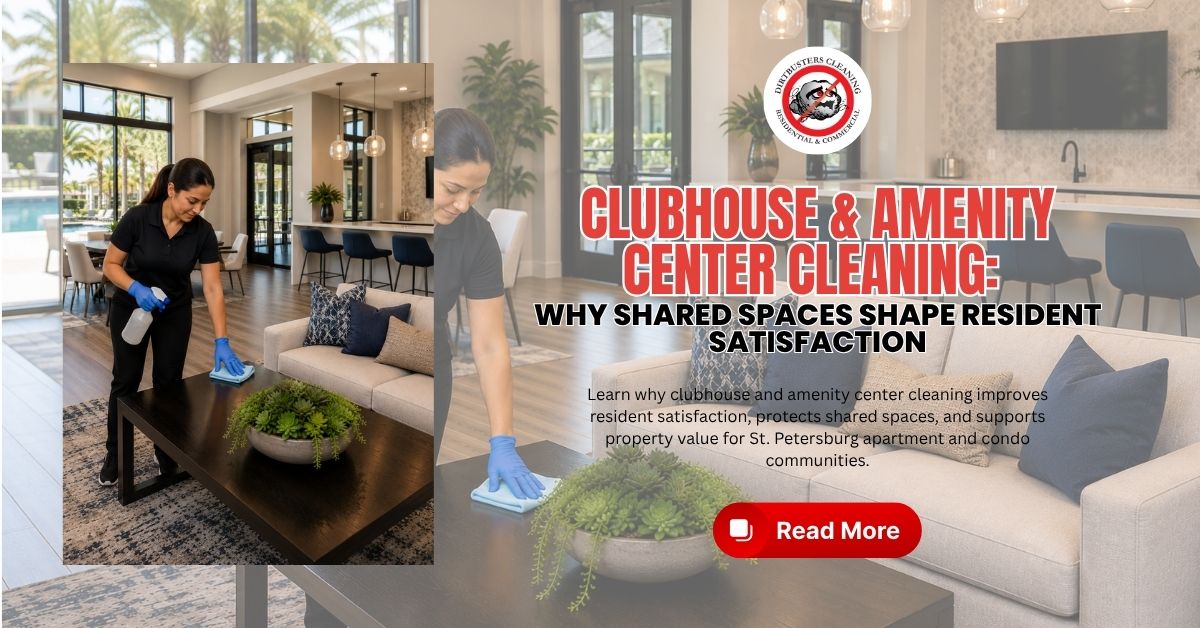
Apartment communities and condominium properties are judged by more than the appearance of individual units.
Residents, prospective tenants, guests, vendors, and board members also notice the spaces everyone shares. Clubhouses, fitness centers, lounges, business centers, game rooms, pool entrances, restrooms, and community kitchens all influence how people feel about the property.
When these areas are consistently clean, the community feels organized, welcoming, and professionally managed. When they are neglected, even an otherwise attractive property can begin to feel worn down.
That is why professional clubhouse and amenity center cleaning should be part of a broader property-maintenance plan rather than treated as an occasional task.
For communities seeking dependable commercial cleaning in St. Petersburg, Dirt Busters helps maintain the shared environments that shape resident satisfaction and protect a property’s reputation.
Shared Spaces Represent the Entire Community
Residents may spend most of their time inside their own homes, but common amenities represent the property as a whole.
These areas often appear in:
- property tours
- leasing presentations
- online photos
- resident events
- HOA meetings
- community announcements
- social media posts
A clean clubhouse can strengthen confidence in management before a prospective resident ever sees an available unit.
The same is true for existing residents. When shared spaces are maintained consistently, people are more likely to feel that their rent, association dues, and community fees are being used responsibly.
Clean amenities communicate care.
Why Resident Satisfaction Is Closely Connected to Cleanliness
Residents may choose a community because of its location, floor plans, pricing, or amenities. Their long-term satisfaction, however, is often influenced by the everyday details they experience after moving in.
They notice whether:
- the clubhouse smells fresh
- fitness equipment is clean
- floors appear maintained
- community restrooms are presentable
- trash is removed
- tables and counters are wiped down
- entrances are free of tracked-in debris
- shared furniture looks cared for
These observations may seem small, but they shape how residents evaluate the overall quality of the property.
A community does not need to feel luxurious to make a positive impression. It needs to feel consistently maintained.
The Amenity Areas That Need the Most Attention
Different communities offer different amenities, but several shared spaces typically experience the greatest wear.
Clubhouses
Clubhouses may host resident events, private gatherings, HOA meetings, leasing appointments, and community activities.
Food, beverages, foot traffic, furniture movement, and frequent use can quickly affect:
- floors
- counters
- restrooms
- kitchen areas
- tables
- seating
- doors and touchpoints
Because the clubhouse is often one of the property’s showcase spaces, inconsistent cleaning can weaken the image management is trying to present.
Fitness Centers
Fitness centers require more than basic tidying.
Residents regularly touch:
- equipment handles
- benches
- controls
- weights
- mats
- door handles
- water stations
Sweat, moisture, dust, and constant traffic can make the room feel neglected quickly. Floors and mirrors also influence whether the fitness center appears fresh and professionally maintained.
Business Centers and Co-Working Rooms
Remote work has made business centers and community workspaces more valuable.
These areas may include:
- desks
- chairs
- shared computers
- printers
- meeting tables
- counters
- charging stations
Regular cleaning helps keep them presentable for residents who may use them daily.
Community Kitchens
Shared kitchens are especially vulnerable to:
- spills
- crumbs
- grease
- fingerprints
- odors
- overflowing trash
Counters, sinks, appliance surfaces, cabinet fronts, and floors need consistent attention, particularly after community gatherings.
Game Rooms and Resident Lounges
Game rooms, theater rooms, and lounges receive a mixture of food traffic, furniture use, and high-touch activity.
Tables, seating, remotes, handles, floors, and entertainment surfaces can all show wear when cleaning is inconsistent.
Pool Entrances and Community Restrooms
Pool entrances bring in moisture, sunscreen residue, outdoor debris, and heavy seasonal traffic.
Community restrooms near pools, clubhouses, or fitness centers also require dependable attention because residents quickly notice when these spaces lose their freshness.
Florida Conditions Create Extra Maintenance Pressure
St. Petersburg communities face conditions that accelerate wear on shared spaces throughout the year.
These include:
- humidity
- frequent rain
- sand
- pollen
- moisture tracked indoors
- year-round activity
- heavy summer use
Humidity can make odors more noticeable. Rain can leave entrance floors wet and streaked. Sand and outdoor debris can scratch surfaces or settle into carpet fibers.
Dirt Busters has explained how humidity, rain, and foot traffic wear down commercial floors faster, and those same pressures affect clubhouses, fitness centers, leasing areas, and other residential amenities.
This is why Florida communities often need cleaning plans built around actual usage and weather conditions rather than a fixed routine that never changes.
Consistency Matters More Than Occasional Deep Cleaning
A deep cleaning can restore an amenity center temporarily, but it cannot replace recurring maintenance.
Shared spaces receive daily use. Dirt, dust, spills, fingerprints, and moisture begin returning almost immediately.
Communities that remain consistently presentable typically combine:
- routine cleaning
- periodic deep cleaning
- floor maintenance
- carpet care
- high-touch surface cleaning
- restroom upkeep
- event-related cleaning
The goal is not simply to correct visible problems. It is to prevent the property from reaching that point.
This is one reason year-round cleaning plans for property managers are more effective than scheduling service only after complaints or visible deterioration appear.
Clean Amenities Support Leasing and Resident Retention
Prospective residents often imagine how they would use a property’s amenities.
They picture themselves:
- exercising in the fitness center
- working in the business lounge
- hosting an event in the clubhouse
- relaxing near the pool
- meeting neighbors in shared spaces
If those areas feel dirty, worn, or poorly maintained, the amenities may stop feeling like benefits.
For current residents, consistent upkeep reinforces the value of remaining in the community. People are more likely to respect, recommend, and continue using amenities that feel clean and cared for.
While cleaning alone does not determine lease renewals or property value, it contributes directly to the experience residents have every day.
Preventive Cleaning Helps Protect Expensive Assets
Amenity centers often contain costly materials and equipment.
These may include:
- commercial flooring
- carpet
- upholstered furniture
- fitness equipment
- cabinetry
- countertops
- appliances
- decorative fixtures
- electronic equipment
Without proper care, these assets may deteriorate faster.
Embedded dirt can wear down carpet fibers. Sand can scratch hard floors. Moisture can affect finishes. Spills can become permanent stains. Grease and residue can damage kitchen surfaces.
Preventive cleaning helps extend the useful life of these materials and may reduce the need for premature restoration or replacement.
The strongest property managers understand this connection between cleaning and asset protection. That preventive mindset is explored further in Why the Best Property Managers Think Like Preventive Maintenance Experts.
Event Cleaning Requires Additional Planning
Clubhouses are often used for:
- birthday parties
- resident socials
- board meetings
- holiday gatherings
- leasing events
- private rentals
- community classes
These events create heavier cleaning demands than ordinary daily use.
A practical event-cleaning plan may include:
Before the Event
- cleaning floors and surfaces
- preparing restrooms
- emptying trash
- checking kitchen areas
- refreshing entrances
- arranging the room for presentation
After the Event
- removing trash
- addressing spills
- wiping tables and counters
- cleaning the kitchen
- restoring furniture
- vacuuming or mopping floors
- checking restrooms
- removing odors
Communities that use their clubhouse frequently should include event needs in the overall maintenance schedule instead of treating every gathering as an unexpected cleanup.
Why One Cleaning Schedule Does Not Fit Every Community
A small condominium property may use its clubhouse only occasionally.
A large apartment community may have residents moving through the amenity center throughout the day.
Cleaning frequency should reflect factors such as:
- number of residents
- amenity usage
- event schedule
- property size
- flooring type
- pool traffic
- weather exposure
- resident expectations
An effective plan may include daily attention for some areas and weekly or periodic service for others.
The best cleaning program is not necessarily the one with the greatest number of visits. It is the one designed around how the property actually operates.
What Property Managers Should Review During a Walkthrough
A brief walkthrough can help management identify areas that need attention before residents begin complaining.
Look for:
- dirty entrance mats
- streaked glass
- fingerprints on doors
- dusty furniture
- stained carpet
- dull flooring
- unpleasant odors
- full trash containers
- dirty fitness equipment
- restroom issues
- spills in kitchen areas
- overlooked corners
It is useful to walk through the amenity center as if you were a prospective resident seeing it for the first time.
What feels welcoming?
What appears neglected?
What would stand out in a property tour or online review?
These observations can help management adjust cleaning priorities before minor issues become bigger ones.
Common Area Cleaning Strengthens the Entire Property
Clubhouse and amenity center cleaning should not be separated from the rest of the community’s maintenance strategy.
The strongest results come when management considers the full resident journey:
- property entrance
- sidewalks
- lobby
- elevators
- hallways
- mail areas
- clubhouse
- fitness center
- pool entrance
- leasing office
A resident or visitor experiences all these spaces as one property.
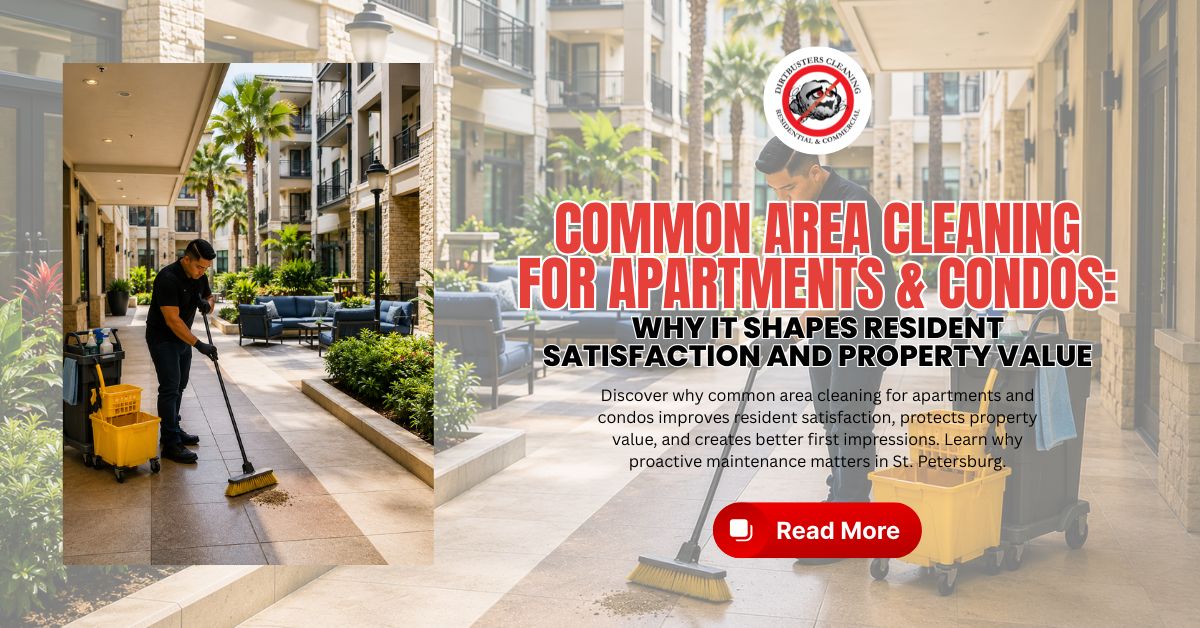
For a broader look at that strategy, read Common Area Cleaning for Apartments & Condos: Why It Shapes Resident Satisfaction and Property Value.
FAQ: Clubhouse and Amenity Center Cleaning
How often should a clubhouse be professionally cleaned?
The schedule depends on resident traffic, event frequency, property size, and the amenities offered. Frequently used clubhouses may need recurring service several times per week, while lower-use spaces may require routine weekly cleaning plus service after events.
What should clubhouse cleaning include?
Service may include floors, tables, counters, furniture surfaces, kitchens, restrooms, doors, glass, trash removal, touchpoints, and other shared areas based on how the clubhouse is used.
Why do fitness centers need frequent cleaning?
Fitness centers contain high-touch equipment and experience sweat, moisture, dust, and constant traffic. Regular cleaning helps keep equipment, floors, mirrors, and shared surfaces more presentable.
Can professional cleaning help protect property value?
Consistent cleaning helps preserve flooring, carpets, finishes, furniture, and equipment. It also supports stronger first impressions for residents, visitors, and prospective tenants.
Should amenity centers be cleaned after private events?
Yes. Events typically create additional trash, spills, food residue, floor wear, and restroom use. Post-event cleaning helps restore the space promptly for other residents.
Keep Your Shared Spaces Ready for Residents
Clubhouses and amenity centers are more than bonus features. They are visible representations of how a community is managed.
Clean shared spaces can improve resident satisfaction, strengthen property tours, support retention, and help protect valuable flooring, furniture, equipment, and finishes.
Dirt Busters works with property managers, apartment communities, condominium associations, and HOAs throughout St. Petersburg to maintain clubhouses, fitness centers, lounges, business centers, and other high-use common areas.
A dependable cleaning plan helps ensure those spaces remain welcoming, professional, and ready whenever residents need them.