A client arrives at your office for the first time.
They walk through the entrance, greet someone at reception, and are shown into the conference room.
Then they wait.
For the next several minutes, they have plenty of time to notice everything around them.
Fingerprints on the conference table.
Dust around the monitor.
Coffee rings from yesterday’s meeting.
Crumbs near the chairs.
A stained carpet.
A whiteboard that was never completely erased.
An overflowing wastebasket in the corner.
None of these things may seem significant individually. Together, however, they communicate something about the business.
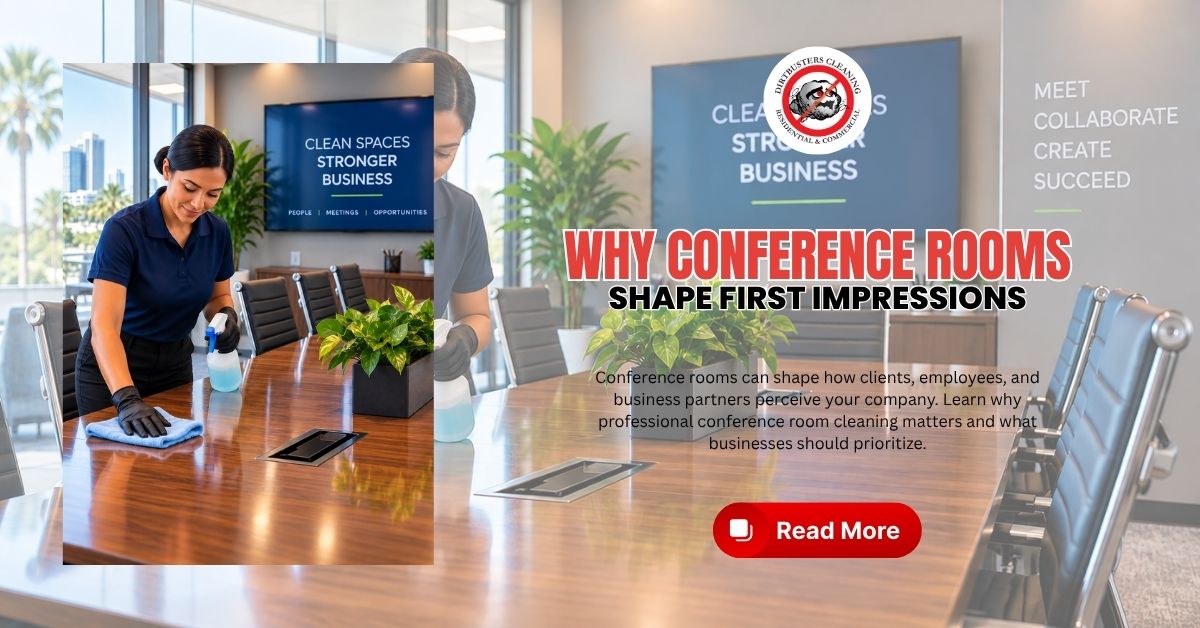
Conference rooms aren’t simply places where meetings happen. They’re spaces where clients make decisions, employees collaborate, vendors negotiate, candidates interview, and business relationships begin.
That makes conference room cleanliness part of your company’s first impression.
Your Conference Room Is Part of Your Brand
Businesses spend considerable time and money developing their brands.
They invest in websites, signs, logos, marketing, furniture, presentations, and sales materials.
Then a potential client arrives for an important meeting and sits at a dirty table.
There is a disconnect.
People naturally form opinions based on their surroundings. A clean, organized conference room can reinforce qualities businesses want associated with their brands:
- Professionalism
- Organization
- Reliability
- Attention to detail
- Preparation
- Quality
A neglected meeting room can unintentionally communicate the opposite.
Professional office cleaning in St. Petersburg isn’t only about keeping desks and floors clean. It should also address the spaces where some of the company’s most important interactions occur.
Clients Have Time to Notice the Details
A busy employee may walk into a conference room and barely notice a fingerprint on the glass.
A visitor waiting for a meeting may have five minutes to look directly at it.
Conference rooms are unusual because visitors frequently spend time sitting quietly before or during meetings. Their surroundings become more noticeable.
They may see:
- Dust on furniture
- Smudges on glass
- Fingerprints on screens
- Dirty chair arms
- Stains on carpet
- Debris beneath the table
- Dusty vents
- Marks on doors
- Food residue
- Cluttered countertops
The smaller details often become more visible precisely because the room itself is supposed to look polished and professional.
The Conference Table Is the Center of the Room
In most conference rooms, the table is the dominant visual feature.
It’s also one of the most frequently touched surfaces.
Throughout a typical week, people may place laptops, phones, notebooks, coffee cups, food containers, paperwork, bags, and hands on the table.
That can leave behind:
- Fingerprints
- Dust
- Beverage rings
- Crumbs
- Sticky residue
- Smudges
A clean conference table immediately makes the entire room appear better maintained.
Cleaning should also extend beyond the obvious tabletop. Table edges, power outlets, cable-management areas, chair arms, and surrounding surfaces can accumulate buildup that routine cleaning may miss.
Glass Makes Cleanliness Easy to Judge
Modern offices often use glass conference-room walls, doors, and tabletops.
They look impressive when clean.
They also reveal fingerprints almost immediately.
Natural light can make smudges especially visible during daytime meetings.
Glass doors may accumulate fingerprints around handles. Glass partitions can show handprints. Tables can reveal dust and beverage marks.
For businesses using glass-heavy office designs, consistent cleaning is essential because these surfaces can quickly change the appearance of an otherwise attractive room.
Carpet Can Quietly Change the Entire Impression
Conference-room carpet receives concentrated traffic.
People repeatedly walk around the same table, pull chairs across the same areas, enter through the same doorway, and sometimes bring coffee or food into meetings.
Over time, this can produce:
- Darkened traffic areas
- Spots
- Beverage stains
- Embedded dirt
- Flattened carpet fibers
- Odors
Routine vacuuming is essential, but periodic professional carpet cleaning in St. Petersburg can address soil and buildup that ordinary vacuuming leaves behind.
Businesses with larger offices can also incorporate commercial carpet and upholstery cleaning into their overall maintenance plan.
Flooring shouldn’t be viewed simply as decoration. As discussed in Why Floor Maintenance Is Actually Asset Management, maintaining floors is also part of protecting the physical assets of a facility.
Technology Needs Attention Too
Today’s conference rooms often contain significant technology.
There may be:
- Televisions
- Video-conferencing equipment
- Cameras
- Speakers
- Remote controls
- Touch panels
- Keyboards
- Conference phones
- Charging stations
Dust around a television or fingerprints across a display can make an otherwise modern meeting room appear neglected.
These items also require appropriate cleaning methods. Electronics shouldn’t simply be treated like ordinary furniture.
A professional cleaning routine should account for technology while avoiding unnecessary moisture or inappropriate products.
Don’t Forget What People See on Video Calls
Conference rooms no longer make impressions only on people physically inside them.
They also appear on Zoom, Teams, Google Meet, and other video calls.
The camera may show:
- Glass walls
- Whiteboards
- Tables
- Chairs
- Screens
- Shelving
- Floors
- Clutter
A room that seems acceptable when walking through it can look surprisingly messy when framed by a camera.
Businesses should occasionally turn on their conference-room camera and look at the room exactly as a remote client sees it.
That perspective can reveal clutter, stains, crooked chairs, dusty surfaces, and distracting background items that employees have stopped noticing.
Food and Coffee Create Additional Cleaning Challenges
Conference rooms frequently become temporary dining rooms.
Morning meetings bring coffee and pastries.
Lunch meetings bring sandwiches and takeout.
Afternoon meetings may include snacks and drinks.
Even when employees clean up afterward, small amounts of food and beverage residue can remain.
Crumbs fall beneath chairs.
Coffee splashes onto tables.
Food containers leave residue.
Trash cans develop odors.
Spills reach carpet.
If these problems aren’t addressed quickly, a meeting room can begin to smell stale even when it looks reasonably clean.
Odor Can Create an Impression Before Appearance Does
People may smell a conference room before they consciously evaluate how clean it looks.
Possible odor sources include:
- Old food
- Trash
- Carpet spills
- Upholstered chairs
- Damp carpeting
- Forgotten coffee cups
- Poor ventilation
Simply spraying fragrance doesn’t solve the underlying problem.
The source should be identified and cleaned.
A room that smells genuinely fresh creates a very different experience from one where fragrance is being used to cover an odor.
Chairs Are Often Overlooked
Conference-room chairs receive constant contact but are easy to overlook during routine cleaning.
Pay attention to:
- Armrests
- Seat surfaces
- Chair backs
- Bases
- Wheels
- Fabric upholstery
Upholstered chairs can collect dust, crumbs, oils, and spills over time.
They may also be one of the first things a visitor physically interacts with.
Keeping them clean supports the overall appearance of the meeting space.
Whiteboards Can Make a Room Look Messy
A whiteboard covered with remnants of previous meetings can immediately make a conference room appear unfinished.
Old marker residue, half-erased notes, tape, magnets, and outdated information create visual clutter.
Unless information needs to remain displayed, whiteboards should be reset regularly.
The same applies to flip charts, presentation materials, and supplies left behind after meetings.
A new client shouldn’t feel like they’ve walked into the remains of someone else’s meeting.
Restrooms Still Affect the Conference-Room Experience
The meeting may happen in the conference room, but the client’s experience doesn’t stop there.
A visitor may use the restroom before or after the meeting.
If the conference room is immaculate but the restroom is neglected, the impression of the entire facility changes.
That is why conference-room cleaning works best as part of a broader commercial cleaning St. Petersburg program rather than as an isolated task.
The lobby, hallways, conference rooms, restrooms, breakrooms, and offices should communicate the same standard.
Conference Rooms Can Affect Employee Experience Too
Clients aren’t the only people influenced by meeting-room conditions.
Employees use these spaces for:
- Team meetings
- Training
- Interviews
- Presentations
- Reviews
- Brainstorming
- Planning sessions
Walking into a clean, organized room allows people to focus on the meeting instead of cleaning up after whoever used the space previously.
It also reinforces expectations.
When a company consistently maintains its workplace, employees are more likely to understand that the physical environment matters.
Important Meetings Deserve More Than Last-Minute Cleaning
Many companies clean conference rooms reactively.
An important client is coming tomorrow, so someone suddenly notices the carpet stain.
Executives are visiting, so the glass gets cleaned.
Candidates are interviewing, so clutter is removed.
A better approach is consistency.
As explored in Great Facilities Don’t Stay Clean by Accident, well-maintained facilities generally result from systems rather than occasional emergency cleaning.
The same principle applies to conference rooms.
The goal should be for the room to be ready for an important meeting every day, not only when someone remembers that a visitor is coming.
A Practical Conference Room Cleaning Checklist
Businesses can use a simple checklist to keep meeting spaces consistently presentable.
After meetings:
- Remove cups, bottles, food, and trash
- Wipe obvious spills
- Return chairs to their proper positions
- Remove unnecessary paperwork
- Reset presentation materials
During routine cleaning:
- Clean and disinfect appropriate table surfaces
- Dust furniture
- Clean glass and doors
- Vacuum carpet or clean hard flooring
- Empty wastebaskets
- Clean chair arms and other high-touch surfaces
- Dust accessible technology areas appropriately
- Clean switches and handles
- Check for odors
- Reset the room
Periodically:
- Professionally clean carpet as needed
- Address upholstered chairs
- Inspect corners and baseboards
- Clean vents
- Inspect walls and doors for marks
- Review areas hidden beneath and behind furniture
Recurring janitorial services in St. Petersburg can help businesses maintain these standards without relying on employees to notice every cleaning issue themselves.
The Entire Office Tells One Story
A visitor doesn’t divide your workplace into separate departments.
They experience it as one environment.
They see the entrance.
Then the reception area.
Then the hallway.
Then the conference room.
Maybe the restroom.
Every space contributes to the same impression.
That’s why professional office cleaning in St. Petersburg should create consistency throughout the workplace.
A spotless conference room surrounded by neglected common areas doesn’t work.
Neither does a beautiful lobby followed by a stained meeting-room carpet.
Strong facility maintenance creates continuity.
Frequently Asked Questions About Conference Room Cleaning
How often should a conference room be cleaned?
Frequently used conference rooms should receive routine attention based on traffic and use. Tables, trash, visible debris, and high-touch surfaces may need attention daily, while carpet, upholstery, baseboards, and other areas can be addressed periodically according to condition.
Should conference-room carpet be professionally cleaned?
Carpet should be professionally cleaned based on traffic, staining, soil levels, appearance standards, and manufacturer recommendations. Conference rooms that host frequent meetings or food and beverages may require more frequent attention.
What areas are commonly missed when cleaning conference rooms?
Chair arms, table edges, door handles, glass, technology surfaces, baseboards, corners, areas beneath the table, vents, switches, and upholstery are frequently overlooked.
Why is conference room cleanliness important?
Conference rooms are often where clients, prospects, employees, vendors, and job candidates spend significant time. Their condition can influence perceptions of professionalism, organization, and attention to detail.
Can Dirt Busters clean conference rooms as part of regular office cleaning?
Conference rooms can be incorporated into an overall office or commercial cleaning plan along with reception areas, workspaces, restrooms, breakrooms, floors, and other shared areas.
Before Your Next Meeting, Sit in the Client’s Chair
There’s a simple way to evaluate your conference room.
Walk into it as if you’ve never been there before.
Then sit where your client will sit.
Don’t look at the room as an employee who sees it every day.
Look at the table.
Look at the carpet.
Look at the glass.
Look at the chairs.
Look toward the screen.
Notice the smell.
Notice the details.
What does the room tell you about the company?
Businesses put tremendous effort into making the right impression through their people, presentations, marketing, and customer service.
The environment should reinforce that effort.
If your business needs dependable office cleaning in St. Petersburg, commercial cleaning in St. Petersburg, or recurring janitorial services in St. Petersburg, Dirt Busters can help keep the spaces where business happens ready for the people who matter.
Because when an important client walks into your conference room, the meeting may not have started yet—but the first impression already has.